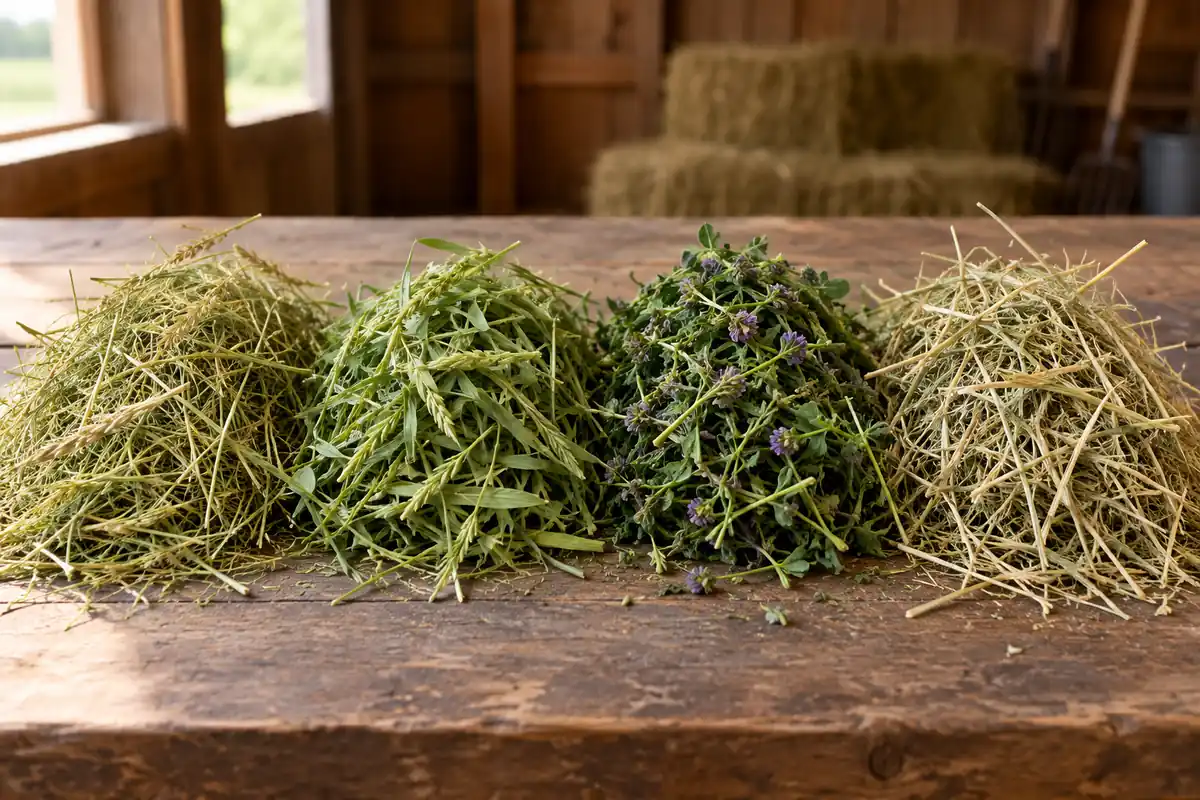
Most adult horses do well on a clean grass hay such as timothy or orchardgrass. Alfalfa is the add-on for horses that need more calories, protein or calcium. That covers a lot of horses, but not all of them. Easy keepers, horses with insulin resistance or a laminitis history, growing foals, hard workers and pregnant or nursing mares each need something a little different.
The hay type is only half the decision. Cutting, maturity, weather and where the hay was grown change the nutrient numbers as much as the species does, which is why two timothy bales can feed very differently. A hay analysis is the only way to know what is in yours.
Horse hay types compared
Hay | Typical protein | Best for | Watch for |
Timothy | 7 to 11% | Most adult horses at maintenance | Low zinc, copper and often selenium; sugar changes with cut and weather |
Orchardgrass | 8 to 13% | Picky eaters, horses that need a little more condition | Can run higher in sugar than timothy; molds quickly if baled damp |
Bermudagrass | 7 to 14% | Horses in warm regions | Mature, stemmy hay is hard to digest; linked to impaction colic in some areas |
Alfalfa | 15 to 22% | Growing horses, lactating mares, hard workers, hard keepers | Calories, calcium, blister beetles; usually best mixed with grass hay |
Teff | 8 to 12% | Some horses that need lower-sugar forage | Needs testing for sugar and nitrates |
Mixed grass or meadow | Varies | Budget maintenance forage | Weeds and inconsistent quality |
Your own bale can land well outside these ranges.
1. Timothy hay
Timothy is a cool-season grass and the default horse hay across much of the United States and Canada. It is high in fiber, moderate in protein and energy, and most horses eat it without fuss.
Cutting stage changes it a lot. Timothy cut before the seed heads form is softer and higher in protein. Later cuttings, with seed heads showing, are coarser, lower in protein and often lower in sugar, which is why people often pick them for easy keepers. “Often” is doing real work in that sentence. Sugar moves with the weather and the time of day the hay was cut, so a bale’s cutting number tells you less than a lab report does.
Timothy is usually short on zinc, copper and, depending on the soil, selenium. A horse eating mostly timothy typically needs a ration balancer or mineral supplement to fill those gaps.
2. Orchardgrass hay
Orchardgrass is soft, leafy and sweet-smelling. Horses that turn up their noses at coarse hay will often clean up orchardgrass, which makes it useful for picky eaters, older horses with worn teeth and horses that need to hold weight. Cut early, it is a little more digestible than timothy.
Do not assume it is the safe choice for a metabolic horse. Orchardgrass can carry as much sugar as timothy or more, and only a test will tell you. It also molds fast if it is baled damp.
3. Bermudagrass hay
Bermudagrass is a warm-season grass that dominates hay fields across the southern United States. Fine, leafy, early-cut bermuda makes a good everyday hay. Coarse, mature bermuda is a different animal: it is tough to digest and low in protein.
Veterinarians in the South have linked Coastal bermudagrass hay to impaction colic, especially after a sudden switch and in horses that drink little. If you are changing to bermuda, do it slowly, keep water clean and available, and watch manure output. Bermuda is also commonly low in selenium and other trace minerals.
4. Alfalfa hay
Alfalfa is a legume, not a grass. It carries roughly twice the protein of grass hay and two to three times the calcium, with more calories per pound. That makes it a good fit for growing horses, lactating mares, horses in hard work and hard keepers. Some research suggests that alfalfa’s calcium and protein help buffer stomach acid, and many people feed a small amount before exercise for that reason.
It also has real downsides:
- Too many calories. Easy keepers gain weight on it quickly.
- Extra protein and calcium. Horses pass the excess in their urine, which means more drinking, more urinating and a stronger ammonia smell in the stall. In some horses, calcium can contribute to bladder stones.
- Fast eating. Most horses love it and clean it up quickly, which leaves long gaps with nothing to chew.
- Blister beetles. These beetles can end up baled into alfalfa, mostly in hay grown in the southern and central United States and cut in late summer. They carry cantharidin, a toxin that can cause colic, kidney damage and death. Ask where the hay was grown and when it was cut.
Most horses do best when alfalfa replaces only part of the grass hay. A common range is 10 to 20% of the total forage, adjusted for the individual horse. A horse with metabolic issues needs a vet’s input and a hay analysis before alfalfa goes anywhere near the ration.
5. Teff hay
Teff is a fine-stemmed, warm-season grass that has become popular for horses needing lower-sugar forage. It can test low in sugar and starch, but that depends on how it was grown and harvested. Teff grown under stress, such as drought, can build up nitrates, which are toxic at high levels.
So it is not automatically the best low-sugar option. A well-made, tested timothy can match it. Whichever you choose, run the analysis.
6. Mixed grass and meadow hay
Meadow and mixed grass hays come from fields with several species, often timothy, orchardgrass, bluegrass and clover. They can be an economical maintenance hay. They can also be wildly inconsistent, since the mix changes field to field and cutting to cutting. Check closely for weeds, seed heads and anything that does not belong in a bale.
Hays to handle with care
Oat, barley and other cereal hays are cut before the grain ripens. They can run high in sugar and starch, and drought or cold stress can load them with nitrates. Test them before you feed them, especially to a metabolic horse.
Clover hay is a legume like alfalfa and shares its calcium and calorie issues. Red clover can cause heavy drooling (slobbers) from a fungus called slaframine, which is unpleasant but usually passes. Alsike clover has been linked to liver damage and photosensitivity in horses, so avoid hay that contains it.
Straw is not hay. It is the stem left after grain harvest, low in protein and energy, and best used for bedding.
Which hay for which horse
- Easy keeper or overweight horse: A mature grass hay with a known sugar level, fed from a slow feeder. Weigh the hay rather than guessing.
- Insulin-resistant horse or one with a laminitis history: Hay chosen by analysis, not by type. Many veterinarians aim for sugar plus starch (reported as NSC, or ESC plus starch) under 10 to 12%. Soaking can lower sugar. Work with your vet on this one.
- Senior horse with poor teeth: Soft, leafy hay such as early-cut orchardgrass or timothy, or soaked hay cubes. Ask your vet or equine dentist whether the teeth need attention.
- Hard keeper or horse in heavy work: Early-cut grass hay with some alfalfa.
- Growing horse or lactating mare: Higher protein and calcium, with minerals balanced against each other. A nutritionist is worth paying for here.
- Pregnant mare: Skip tall fescue hay unless it has been tested endophyte-free. The endophyte fungus can cause long pregnancies, difficult foalings and poor milk production.
- Horse with dust or breathing problems: Low-dust hay, soaked or steamed, and a vet visit if coughing continues.
How much hay does a horse need per day?
Plan on about 1.5 to 2% of body weight in hay per day. That is 15 to 20 pounds for a 1,000 pound horse, or 7.5 to 10 kilograms for a 500 kilogram horse. Hay is mostly dry matter but still holds some water, so treat this as a starting point and adjust by body condition, workload, pasture and hay quality.
Flakes vary a lot in weight, so weigh a few on a hanging scale and you will know what you are really feeding. Horses are built to eat small amounts almost all day. Long gaps without forage raise the risk of ulcers and colic, so slow feeders and hay nets beat two big meals.
Cutting hay below roughly 1.5% of body weight to help a horse lose weight is a call for your vet or an equine nutritionist.
How to check hay before you buy it
Open a bale. The surface is often sun-bleached, and that tells you little. Look inside.
- Smell it. Good hay smells sweet or grassy. A musty, sour or dusty smell means mold or heat damage, even when you cannot see anything.
- Look for leaves. Soft, leafy hay with fine stems is easier to chew and usually more nutritious than stalky hay full of seed heads. Color alone is a weak guide.
- Shake a flake. A cloud of dust means trouble for horses with sensitive airways.
- Feel the bale. Warm or unusually heavy bales were probably baled wet. Hay baled too damp can mold, overheat and, in rare cases, catch fire.
- Check for strangers. Weeds, sticks, wire, plastic and dead animals do not belong in horse hay. A dead animal baled into hay can release botulism toxin, which is a particular risk in large round bales and wrapped bales.
- Ask questions. When was it cut? Where was it grown? How was it stored? A decent supplier answers without fuss.
If you see visible mold, do not feed it. Mold can cause colic and breathing problems, and some molds produce toxins.
Get a hay analysis
Appearance cannot tell you protein, sugar, starch or mineral levels. A forage test can. Ask the lab for moisture, protein, fiber, digestible energy, sugar and starch (NSC), and the main minerals including calcium, phosphorus, magnesium and potassium. Add nitrates if the hay is a cereal grain or teff, or if the crop had a rough season.
Use a hay probe to pull cores from several bales of the same lot, mix them in a clean bag and send them in. Your county extension office can point you to a certified lab, and many rent out hay probes. Test again when you buy a new lot.
Changing hay without upsetting your horse
Switch over 7 to 14 days. Replace a small portion of the old hay with the new, increase it every day or two, and watch appetite, manure and behavior. A sudden change is a common trigger for colic, and bermudagrass and rich alfalfa are the ones most worth being careful with.
Storing hay
Keep hay dry, covered and ventilated, and off bare ground. Pallets work. Rain and ground moisture grow mold, and sun bleaches the surface and strips out vitamins. Vitamins A and E fall quickly in storage while fiber holds up well, so older hay that is clean and dry is still usable for fiber but should not be counted on for vitamins. If you can, store hay in a separate building from the horses, because a heating bale is a fire risk.
Frequently asked questions
What is the best hay for horses?
There is no single best hay. For most adult horses, a clean, leafy grass hay such as timothy or orchardgrass is a sound base. Horses with higher energy needs may do better with some alfalfa added, and metabolic horses need hay chosen by analysis.
Is timothy or alfalfa better for horses?
Neither wins outright. Timothy is lower in protein, calcium and calories, which suits most adult horses at maintenance. Alfalfa has more of all three, which suits growing horses, lactating mares and hard workers. Many horses do well on timothy with a small amount of alfalfa.
Can a horse live on hay alone?
Good hay can supply most of a horse’s calories and fiber, but not everything. Horses also need clean water, salt and usually a mineral or vitamin source, because hay tends to be low in zinc, copper, selenium and vitamin E. A hay analysis shows which gaps to fill.
What hay is best for a horse with metabolic problems?
No hay type is safe by default. Look for grass hay with low sugar and starch, confirmed by testing, and ask your vet about soaking and portion sizes. Do not rely on a bag or bale label.
How can you tell if hay is bad?
Visible mold, a musty smell, heavy dust, warm or damp bales, foreign objects and unfamiliar weeds are the warning signs. When in doubt, skip it. Colic and breathing trouble cost far more than a bale of hay.
How long does hay last in storage?
Dry, covered hay can stay safe to feed for a year or longer. Vitamin content and leaf quality decline over time, though, so buying the current season’s cutting is the better choice when you can.